


Flow Into Roots: Anita Chan Lai-ling Gallery, Fringe Club, Hong Kong
2025
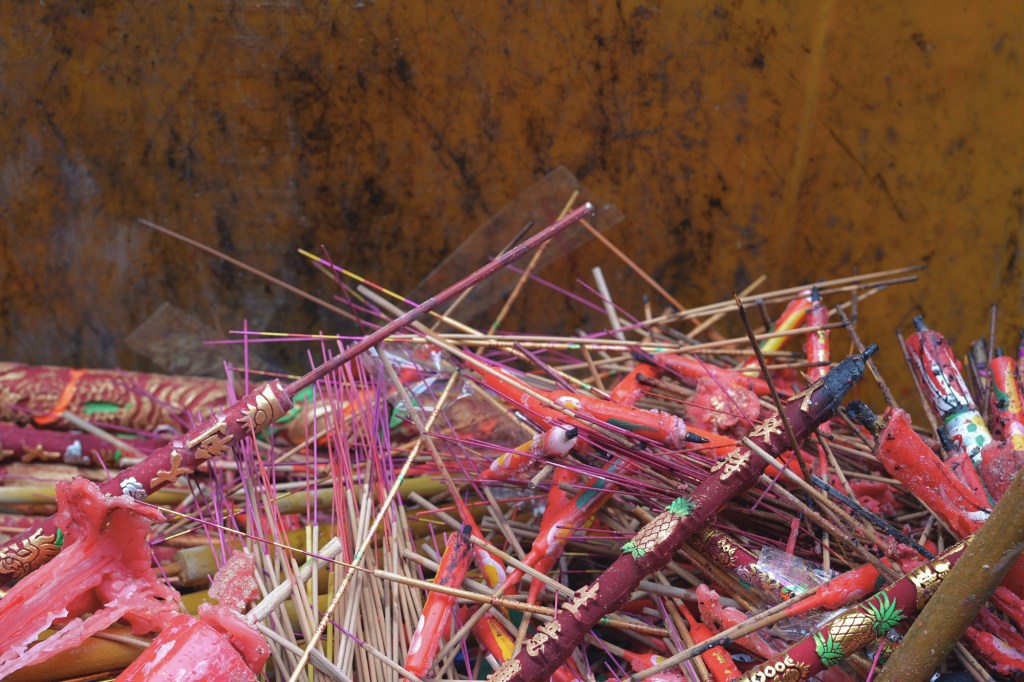
Fishing is one of Hong Kong’s thriving trades, with some traditional festivals rooted in fishing culture. People burn incense to pray for safe voyages, good catches, and peace for lost souls. Nowadays, temples overflow with worshippers during these festivals, and staff must constantly clear incense burners to make room for later arrivals to place their incense. Most incense sticks are extinguished and discarded shortly after being lit.
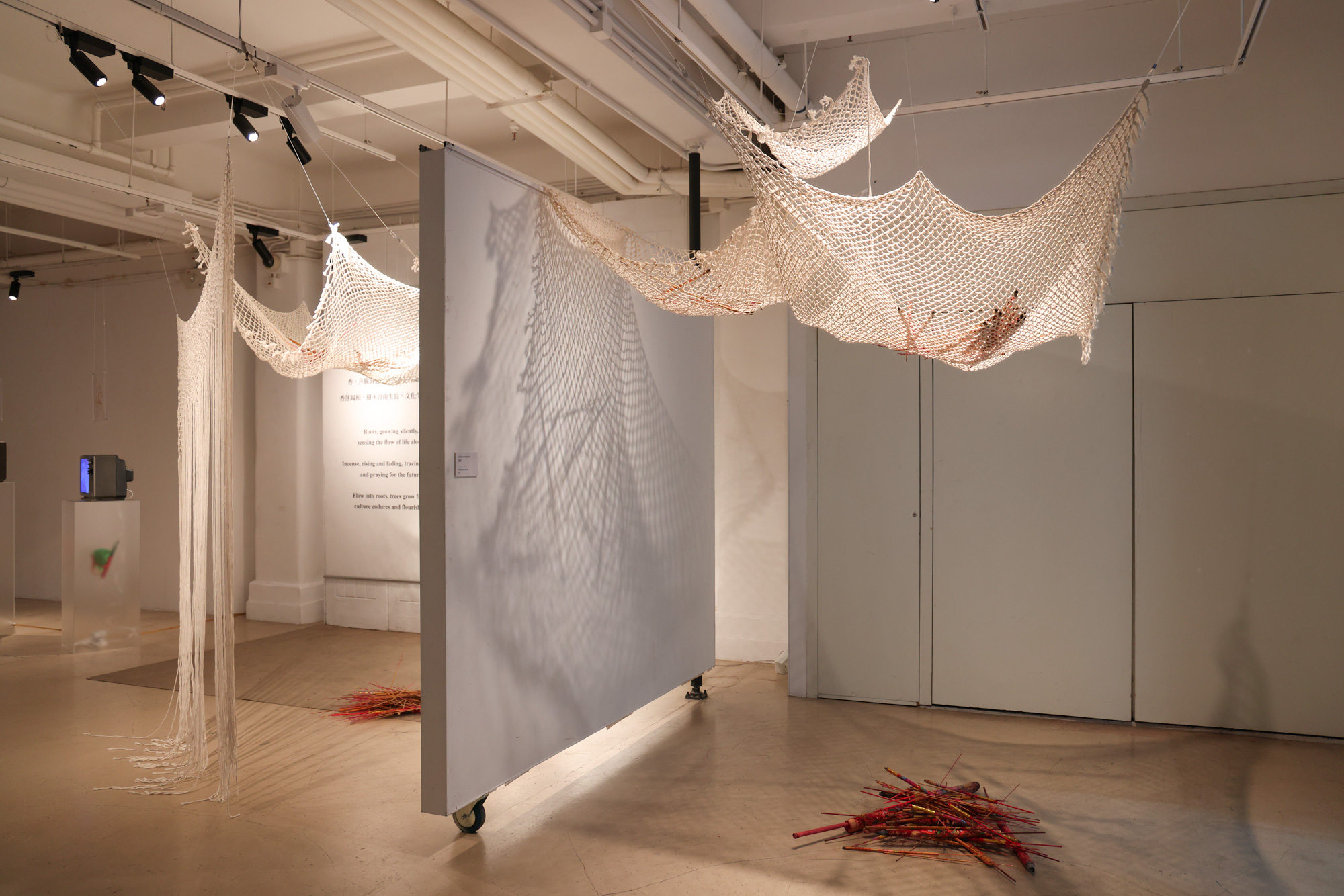
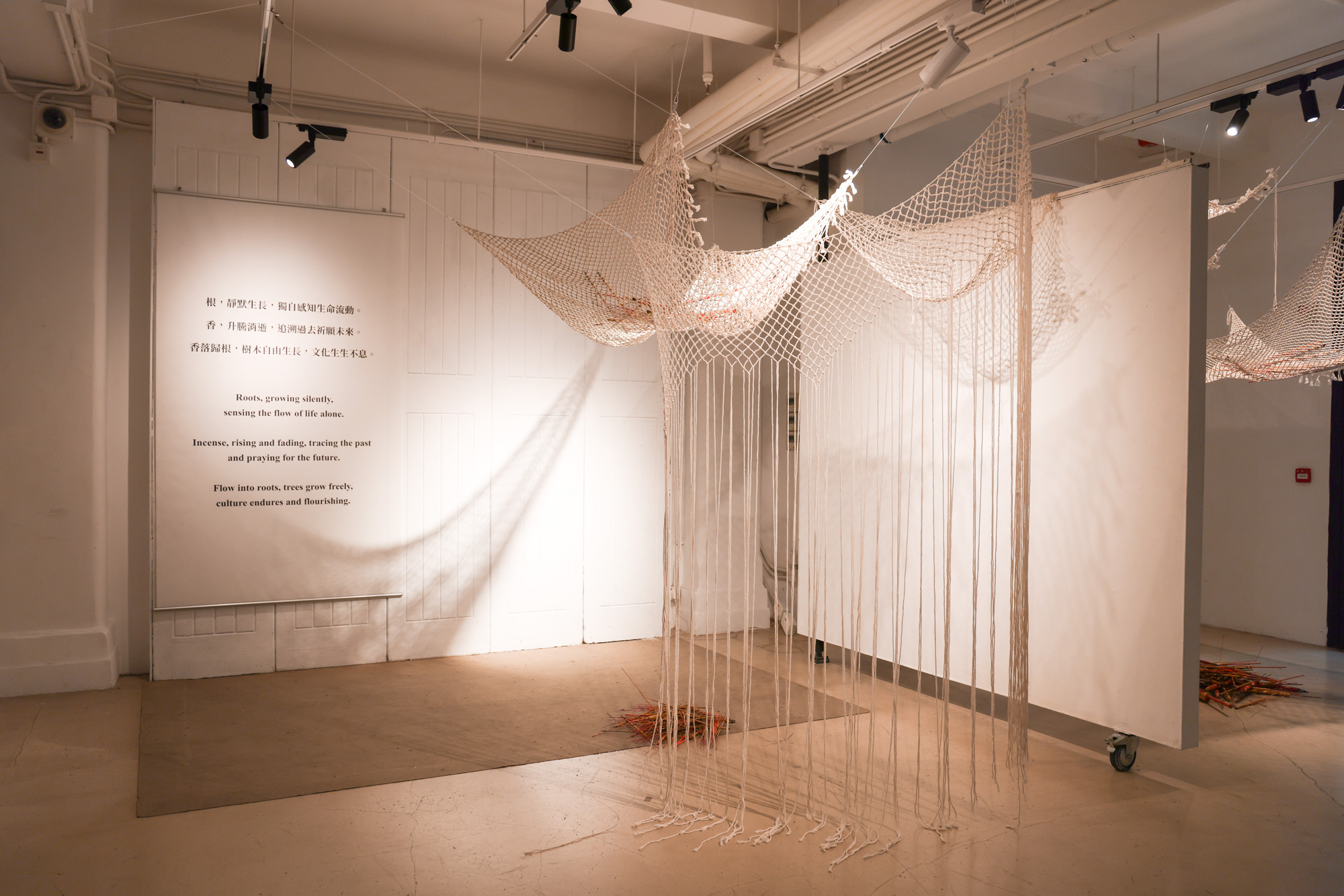
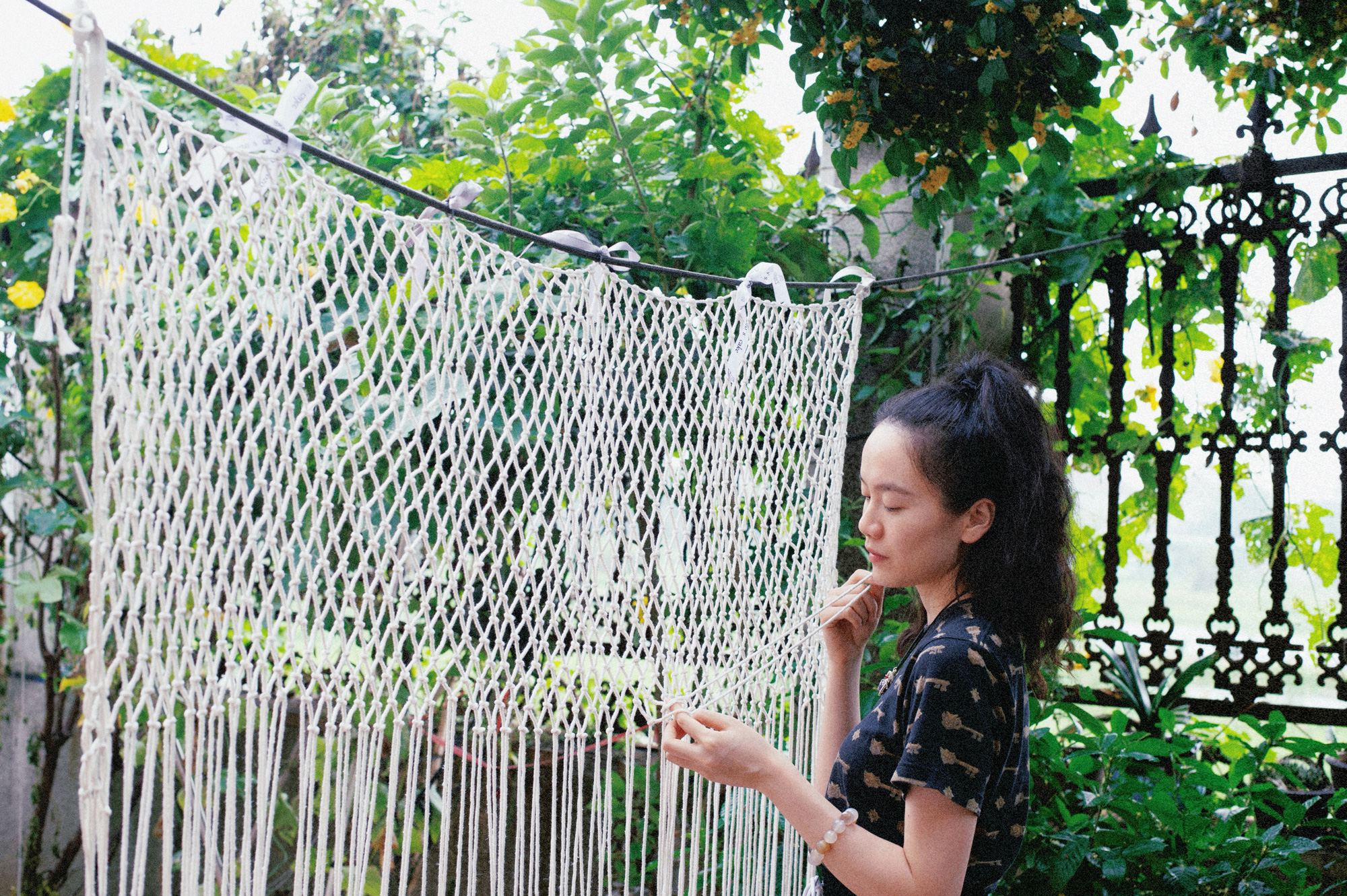
How should we view this waste? Can we use natural resources more sustainably or maximize each incense stick’s purpose? “Fishing” brings wealth, while “catching incense” seeks a future of mutual benefit between humans and nature. Even if this hope is as flammable and fragile as a cotton thread, “catching”, this action will continue to be repeated.
漁業是香港繁盛的貿易之一,部分中國傳統節慶也起源於捕魚活動。人們通過燒香、祭祀儀式,祈禱航行平安、漁業豐收,並安撫海上迷失的靈魂。現如今每逢傳統節日,香港各地的廟宇就擠滿了絡繹不絕的香客。由於香爐的空間有限,工作人員必須隨時清理尚未燃盡的香枝以確保後到的香客有足夠的空間插香。
如何看待傳統儀式中香產品的浪費?是否可以讓自然資源的消耗更具可持續性,亦或是讓每一件香枝都得以物盡其用。“捕魚”捕的是財富,“捕香”捕的則是人與自然互惠共生的未來。即使這種期望如棉線般易燃易斷,“捕撈”也依舊會重複進行。
 CHENG YANG