

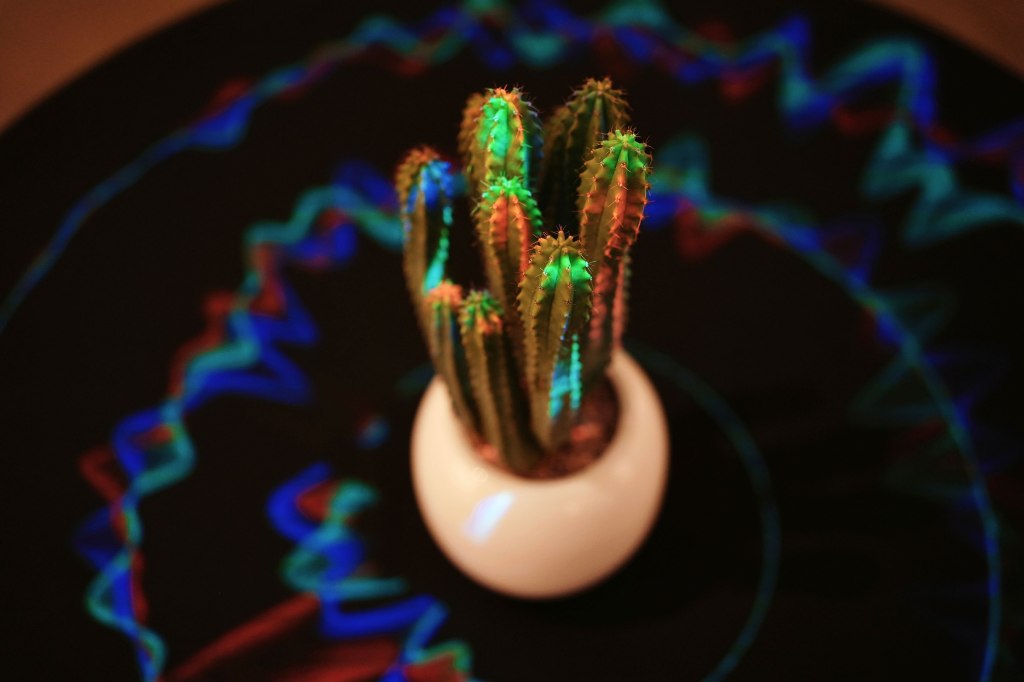

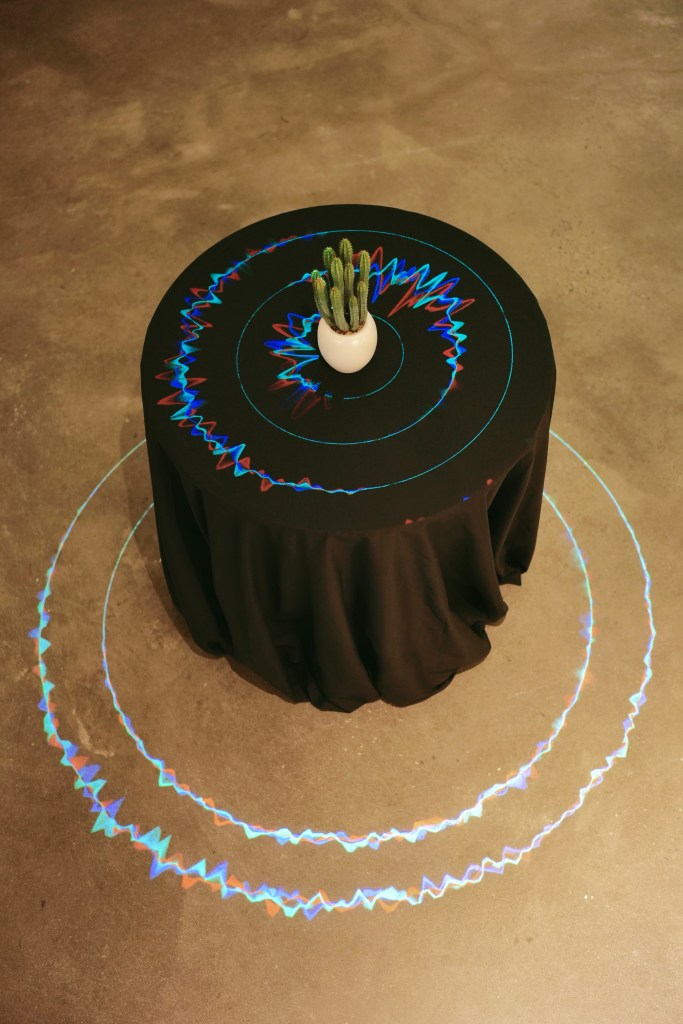
As an international metropolis, the central streets of Hong Kong are always bustling with hurried pedestrians. The pedestrian traffic signal sounds highlight the unique characteristics of Hong Kong’s urban soundscape, creating a sensory map that resonates with these pedestrians. However, the fast-paced rhythm, unfamiliar language, and humid air create a sense of alienation for the “outsider”, emerging a feel as vast and isolating as a desert.
I imagine myself as a cactus, an outsider, a foreign species, a plant that adapts and thrives in arid environments. The cactus, with its self-sufficient nature, becomes a symbol of resilience and independence. Amid the alternating red and green pedestrian traffic lights, I move and pause, sensing my own existence, allowing the external noise to fade like sand. When we no longer passively adapt but actively tune our inner frequencies, perhaps we can finally find a true connection with the city, nature and ourselves.
香港作為一個國際大都會, 街道上總是熙來攘往。行人交通信號的聲音凸顯了香港城市聲景的獨特特徵,形成了一幅與行人產生共鳴的感官地圖。然而,快速的節奏、不熟悉的語言以及潮濕的氣息,給「異鄉人」增添一種疏離感,即使身處擁擠的人群也彷彿置身與廣闊而孤立的沙漠。
我將自己想像成一棵仙人球,一個外來物種,一個能在乾旱惡劣環境中適應生存的植物。仙人球的自給自足特性成為一種韌性和獨立的象徵。在紅燈與綠燈的交錯中,走走停停,感受自我的存在,讓外界的雜音如風沙般逐漸消散。當我們不再被動地適應,而是主動去調整內在頻率時,或許就能找到與城市、與自然、與自己的真正連結。
 CHENG YANG